Free download (46 MB) Previous versions
- Version
- 6.1.4
- Developer
- Rogue Amoeba Software
- Languages
- English
- License type
- K'ed by TEAM EDiSO
| macOS range | macOS 15 or later |
|---|---|
| Chip | Apple Silicon, Intel 64-bit |
| Download | 46 MB |
| Previous versions | 14 on file |
Screenshots
Click a screenshot to see it wider.
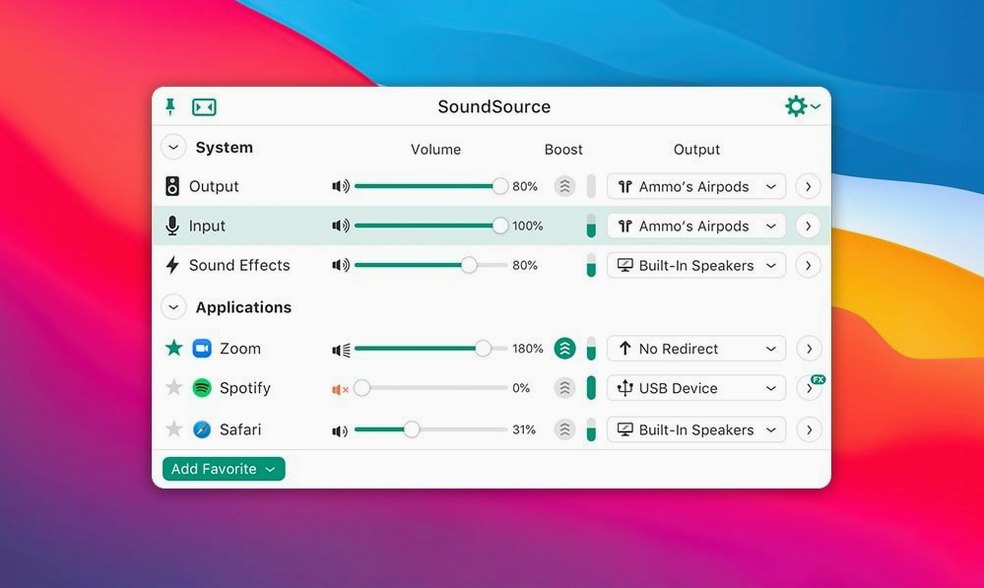
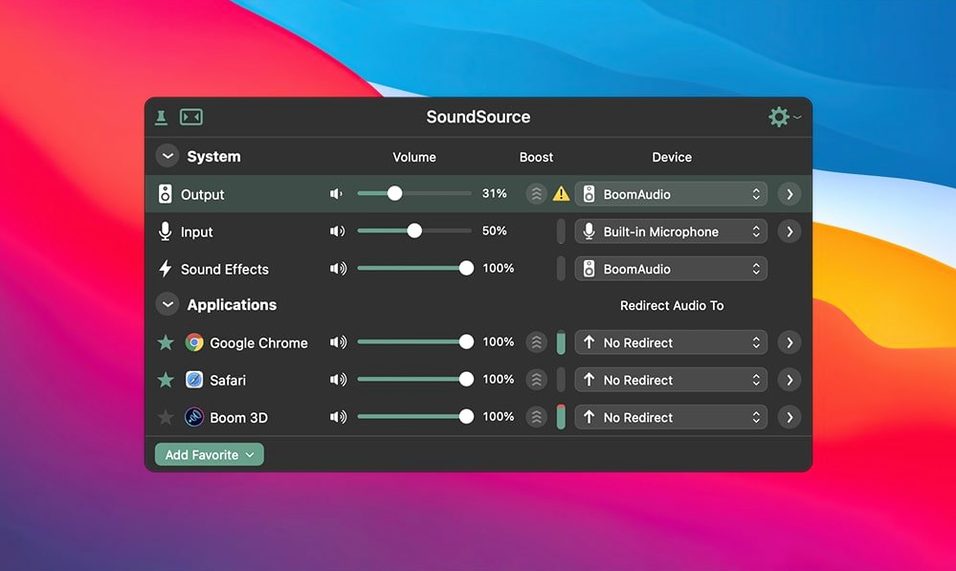
SoundSource is the audio control panel you wish macOS shipped with. It works like a dedicated mixer for your Mac, letting you route sound per app and switch devices in two clicks.
Routing Audio to Multiple Outputs
- Routing audio to multiple outputs at once with Output Groups — useful for testing across speakers and headphones without replugging.
- Saving complete audio configurations and switching your entire Mac audio setup with a single click.
- Applying the built-in Headphone EQ effect to specific applications only, not system-wide.
- Quick access to important Mac sound settings without digging through System Preferences.
Requires macOS 15 or Higher
- SoundSource 6 requires macOS 15 or higher. No support for macOS 14 or earlier.
- Per-app audio control and Headphone EQ are included, but only for apps that follow macOS audio standards.
- Version 6.1.4 fixed Bluetooth output performance issues and a crash on macOS 27.
What SoundSource Does to Your Mac
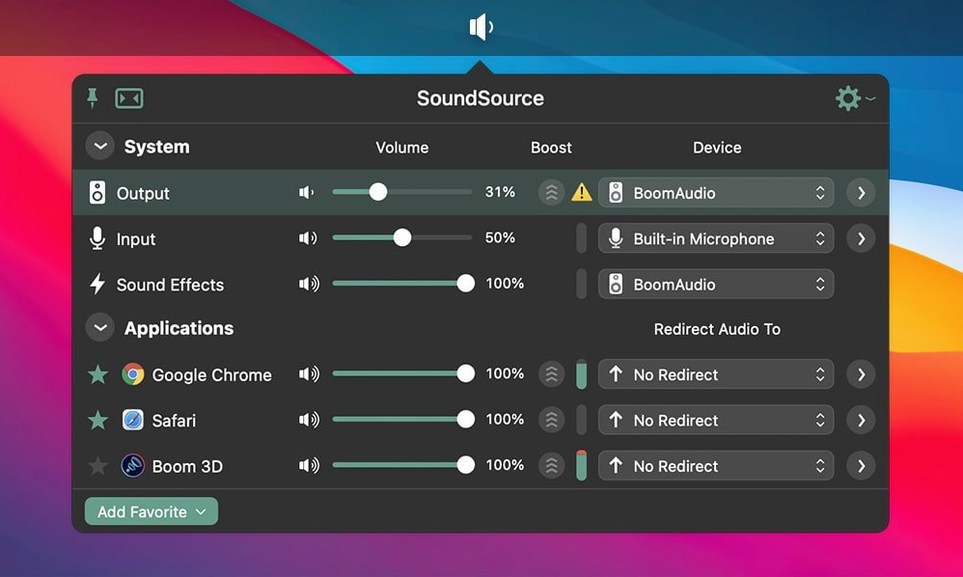
SoundSource itself is a lightweight menu bar app. You won't notice it running until you need it. It sits in the menu bar and does not add a persistent dock icon or a floating window. The main window appears only when you click the menu bar icon or assign a shortcut.
System requirements are macOS 15 or later. It runs on both ARM and 64-bit Intel Macs. The app is a 64-bit binary. If you are on macOS 14 or earlier, it will not install. The installer uses a Gatekeeper bypass step, so you will see a Terminal window during setup — that is normal. No extra audio drivers or kernel extensions are installed.
Expect the built-in ARK plugin to be updated to version 13.5.4 as of SoundSource 6.1.4. The interface is English only.
Adjust Per-App Sliders, Not System Volume
New users often miss that SoundSource controls per-app audio, not just the system output. They adjust the system volume slider and wonder why one app stays loud. The per-app sliders are in the main window, grouped under each running application.
Another mistake is ignoring Output Groups. Beginners set one output device and assume that is the only option. Output Groups let you send audio to two or more outputs at once — useful for a headphone check while a speaker feed runs. You configure these in the Output Groups section of the preferences.
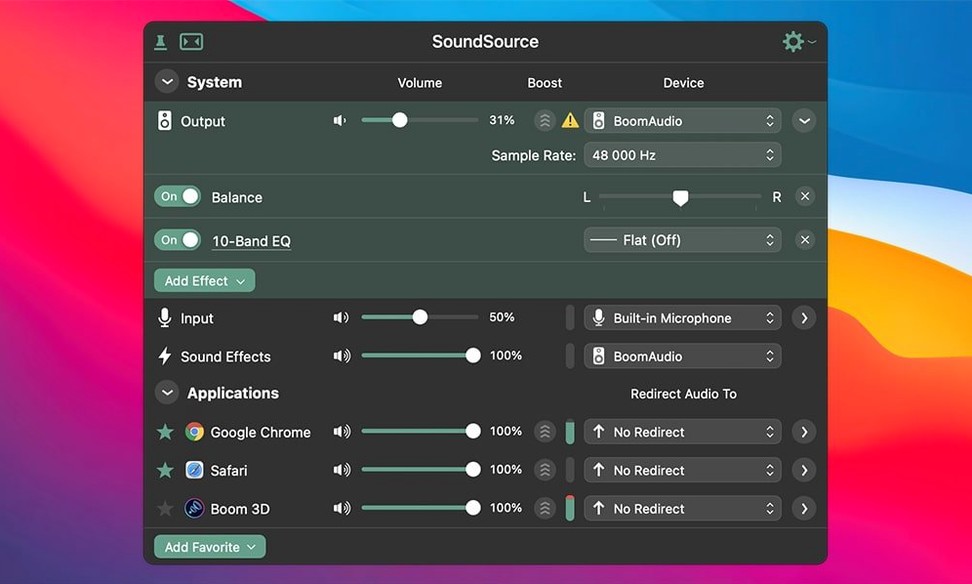
People also assume the Headphone EQ applies to everything. It does not. It applies only to the specific apps you assign it to. If you want EQ on a podcast app but not on system sounds, you assign it per app in the SoundSource window.
A simple one: forgetting to save a configuration before changing devices. If you switch audio setups often, save a preset first. That way you can restore the entire routing, output group, and volume state in one click later.
SoundSource vs. Alternative Audio Tools
SoundSource vs. Audio Hijack
Audio Hijack is a Rogue Amoeba app for recording and processing audio from any source on your Mac. SoundSource handles routing and control. Audio Hijack records. If you need to capture a streaming feed or apply real-time effects to a recording, Audio Hijack is the tool. If you need to switch outputs and control per-app volume, SoundSource is the tool. They complement each other but do not overlap.
SoundSource vs. Loopback
Loopback creates virtual audio devices for routing audio between apps. It is also from Rogue Amoeba. SoundSource controls existing hardware outputs and per-app settings. Loopback creates new virtual inputs and outputs. If you need to send audio from one app into another, Loopback is the answer. SoundSource does not create virtual devices. It manages the ones you already have.
SoundSource vs. macOS Built-in Sound Settings
macOS System Preferences gives you a system output selector and a volume slider. That is it. SoundSource adds per-app volume, per-app EQ, output groups, saved configurations, and AirPlay support. The built-in panel is fine for basic use. SoundSource is for anyone who needs more than one output or wants to control app-level audio without third-party mixers.
Release notes for 6.1.4 are posted on Rogue Amoeba's site.
- macOS 15 or later
- Apple Silicon or Intel 64-bit
Questions I get about this line
Yes. Output Groups let you send audio to multiple outputs at once, handy for testing across different devices.
The install order
Grab the 46 MB download, built for Apple Silicon and Intel Macs on macOS 15 or later. Three steps, no surprises.
- Open the downloaded disk image.
- Drag the SoundSource icon into the Applications folder shortcut.
- Once the copy finishes, launch the app from Launchpad.