- Home
- VST Plugins
- Arturia Augmented Voices

Free download (4.8 GB) Previous versions
- Version
- 2.0.2 (6369)
- Developer
- Arturia
- Languages
- English
- License type
- K'ed by MORiA
| macOS range | macOS 11 or later |
|---|---|
| Chip | Apple Silicon, Intel 64-bit |
| Download | 4.8 GB |
| Previous versions | 9 on file |
Screenshots
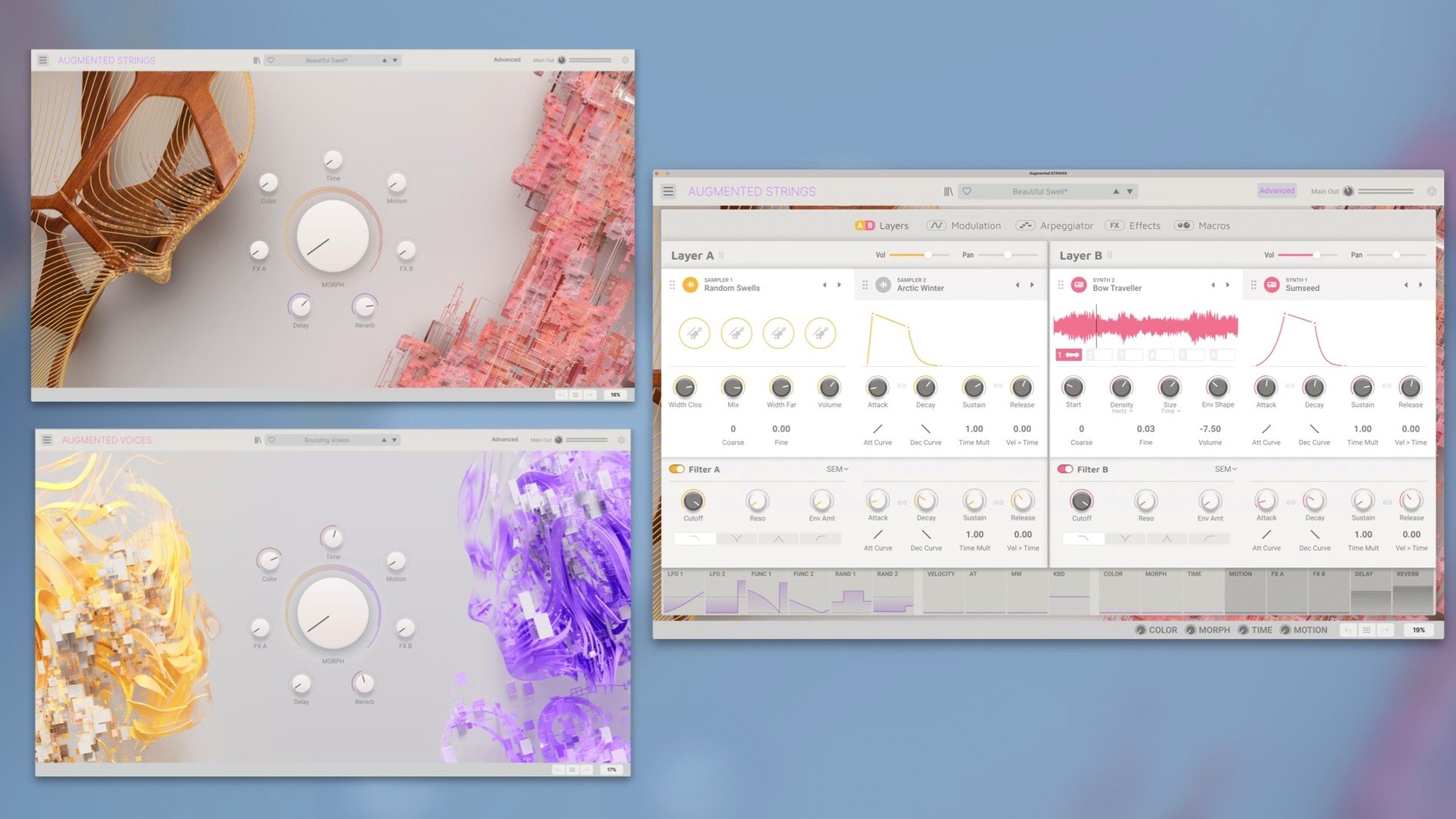
Most vocal plugins give you a sample library and a filter. Augmented Voices goes further, and version 2.0.2 (6369) is where the depth shows. If you are past the presets and want to shape the sound yourself, this is where to look.
What the deeper workflow looks like
- Two layers, each with two sound sources, so you can stack up to four independent voices.
- Four synthesis engines on top of the sample content — you are not stuck with static recordings.
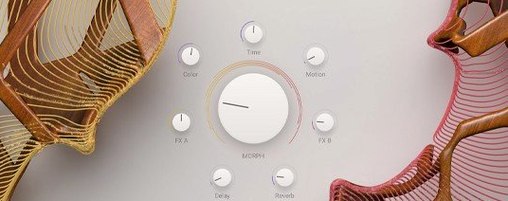
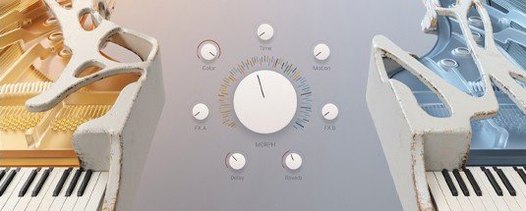
- A Morph control that blends between layers in real time. Assign it to a mod wheel or an LFO and the instrument starts moving.
- Built-in effects sit after the voices, so you can add space, drive, or modulation without leaving the plugin.
- More than 50 vocal articulations give you the raw material to work with.
Standalone or in the DAW
Augmented Voices runs as a standalone instrument and as a plug-in in Audio Unit, AAX, VST, and NKS formats. That means the same patch works live and in Logic, Pro Tools, or Cubase. On a Mac, it runs natively on both Apple Silicon and Intel. The interface is English, and macOS 11.0 or later is all it asks for. For an experienced user, the payoff is a vocal instrument that behaves like a synthesizer, not a rompler.
Architecture vs. Arcade and VocalSynth
If you have worked with Output Arcade or iZotope VocalSynth, the difference is in the architecture. Arcade gives you phrase-based vocal hits and loops inside a multi-sampler shell. VocalSynth is a real-time processor for live vocals, not a standalone instrument. Augmented Voices sits between them — it is a sampled instrument with proper synthesis engines, not a loop player or an effect rack. The four engines let you generate sound from scratch, while the 50 articulations give you a vocabulary of organic starts, breaths, and attacks that you can splice into the patch. Neither of the other two gives you two independent layers with a Morph control that crossfades between them.
4.84 GB, macOS 11.0+, ARM and Intel
The Mac build comes in at 4.84 GB. It requires macOS 11.0 or later and runs on ARM (Apple Silicon) and 64-bit x86 Intel Macs. The interface is English, and the plugin formats are Audio Unit, AAX, VST, and NKS. On a modern Mac, the install follows the standard Arturia procedure. The size reflects the sample content — more than 50 articulations plus the synth engine data. You will want enough free drive space to hold the library and let it stream comfortably during a session.
How it compares with Kontakt and UVI Workstation
Kontakt is a sampler first. You load a library and play back what the developer recorded. UVI Workstation follows the same model — excellent for orchestral or phrase-based content, but the sound engine stays locked to the sample layer. Augmented Voices puts the synthesis engines on equal footing with the sampled articulations. You can start with a breath sample on layer A, add a wavetable on layer B, and morph between them. Kontakt and UVI do not blend sample and synth at the layer level the way this does.
What to expect on your Mac
The installer is the standard Arturia one. After the 4.84 GB download, the software registers itself in your plug-in folders and as a standalone app. macOS 11.0 or later is the only requirement. Both Intel and Apple Silicon machines run the same build — no separate download needed. The interface uses English throughout. In a DAW, the plugin appears in Audio Unit, AAX, VST, and NKS formats. If you already have other Arturia instruments, the license handling is the same. No extra background services or background processes run after the session ends.
- macOS 11.0 or later
- Apple Silicon or Intel (64-bit x86)
- Interface language: English
Questions I get about this line
Yes. The Mac version supports both ARM (Apple Silicon) and 64-bit x86 architectures natively.
It supports Audio Unit, AAX, VST, and NKS, so it works in most major DAWs.
Yes. Augmented Voices runs as a standalone instrument as well as a plugin.
The install order
- Run the installer.
- Follow the standard installation steps.