- Home
- VST Plugins
- Arturia V Collection 11 Pro
- Version
- 2025.20.26
- Developer
- Arturia
- Languages
- English
- License type
- Included
| macOS range | macOS 11 or later |
|---|---|
| Chip | Apple Silicon, Intel 64-bit |
| Download | 53.8 GB |
Screenshots
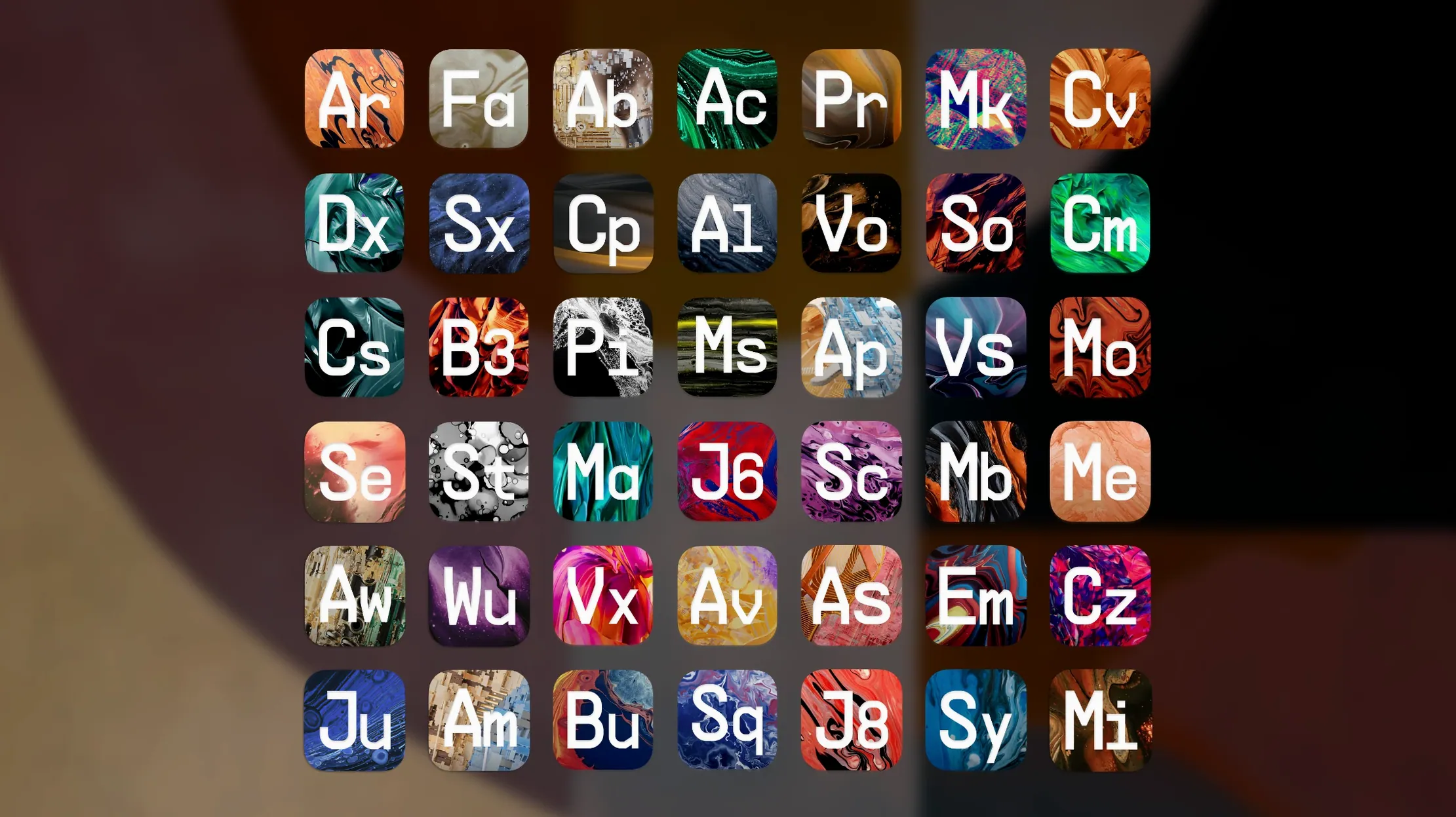
You load a patch on Jup-8000 V and start turning the cutoff. The filter responds the way you expect from a Jupiter, but with the extra control the V Collection gives you. Every instrument in the suite, from Mini V to Vocoder V, has an arpeggiator right on the panel. That one control changes how you work — you can sketch a chord and let the arpeggiator turn it into a pattern without touching a sequencer.
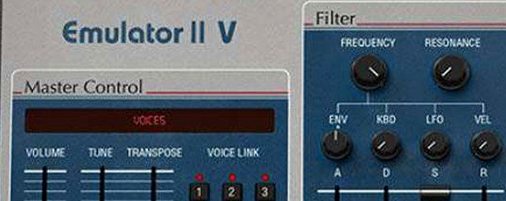
Filter and envelope controls respond like the hardware
The knobs and sliders are mapped to the key parameters of each original instrument. On SEM V, the filter and envelope behave like the hardware, so you get that liquid, responsive character. On Pure LoFi, the controls are about character — tape noise, saturation, and bit depth are all at hand.
Are the new instruments different from the older ones?
The seven new additions include Jup-8000 V, Synthx V, MiniBrute V, SEM V, and Pure LoFi, plus next-generation Augmented instruments. They bring fresh sound engines while keeping the familiar layout. The arpeggiator is on every one, so you can start moving fast.
What is the version label?
The current build is Arturia V Collection 11 Pro v2025.20.26. It runs on macOS 11 and later, in both Intel and Apple Silicon. Plug-in formats cover Audio Unit, VST, VST3, and AAX.
Browser and preset search gets you playing fast
You open your DAW, load Jup-8000 V on a MIDI track, and pick a preset from the browser. The search bar finds anything by name or tag. You play a simple bass line — the filter opens with the envelope, and the arpeggiator turns your held notes into a running pattern. You dial in a little echo from the built-in effects, and the line sits in the mix without extra plugins.
Next, you pull up PolyBrute V for a lead. The modulation options let you add animation — a slow LFO on the filter cutoff. You save the patch as a user preset and move on. For a pad, you try Augmented Yangtze, one of the new instruments. The controls are the same layout, so muscle memory works. You add reverb from the panel, not a send channel.
By the end of the session, you have four instrument tracks from three different instruments in the suite. No external effects, no routing to another synth. Everything came from the plug-in panels.
Focused on vintage synths, not a general workstation
Compared to Spectrasonics Omnisphere, the V Collection covers a narrower arc — focused on vintage and modern synthesizers and keyboards rather than a general-purpose workstation. Omnisphere has a huge sample library and a deep synthesis engine, but the Arturia instruments model specific hardware behavior. The filter on Prophet-5 V sounds like the Prophet, not a general filter.
Against Native Instruments Komplete, the V Collection is all instrument, no sample libraries, no drum machines, no effects. Komplete gives you a wider palette, but the Arturia instruments offer more detail per synth. The arpeggiator and modulation sections are on every plug-in, which Komplete instruments do not share uniformly.
UVI Falcon is a modular workstation where you build your own instruments. The V Collection is the opposite — you get finished instruments ready to play. You do not design the engine, you twist the knobs and play.
Each suite has a different approach. The V Collection is for when you want a specific synth or keyboard sound and the controls that go with it.
- Added 7 new instruments: Jup-8000 V, Pure LoFi, Synthx V, MiniBrute V, SEM V, and next-generation Augmented instruments.
- Expanded the suite to 45 instruments.
- macOS 11 or later
- Intel or Apple Silicon (M1 or newer)
- 8 GB RAM
- 50 GB free disk space
- OpenGL 2.0 compatible GPU
- 4-core CPU or M1 CPU
Questions I get about this line
The suite includes 45 instruments, such as Jup-8000 V, Synthx V, MiniBrute V, SEM V, Pure LoFi, Mini V, MS-20 V, CS-80 V, Prophet-5 V, Jup-8 V, and Vocoder V.
Yes, each instrument in the collection includes an arpeggiator.
The install order
- Install the software package from the archive.
- Follow the included instructions for installation and activation.