

Free download (169 MB) Previous versions
- Version
- 23.1.9.R10 Plus
- Developer
- Intuit
- Languages
- English
- License type
- Not required
| macOS range | macOS 12 or later |
|---|---|
| Chip | Apple Silicon, Intel 64-bit |
| Download | 169 MB |
| Previous versions | 1 on file |
Screenshots
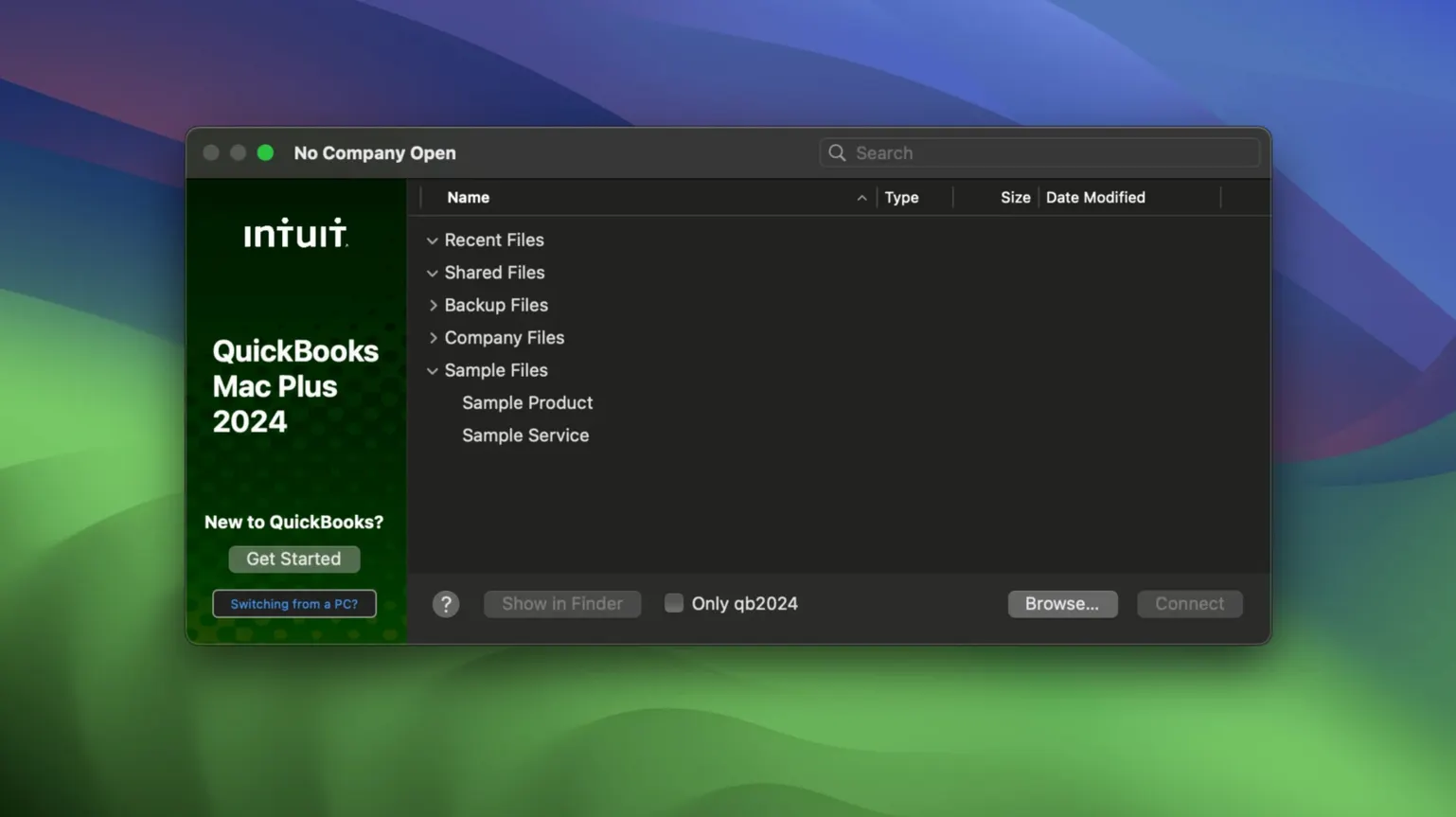
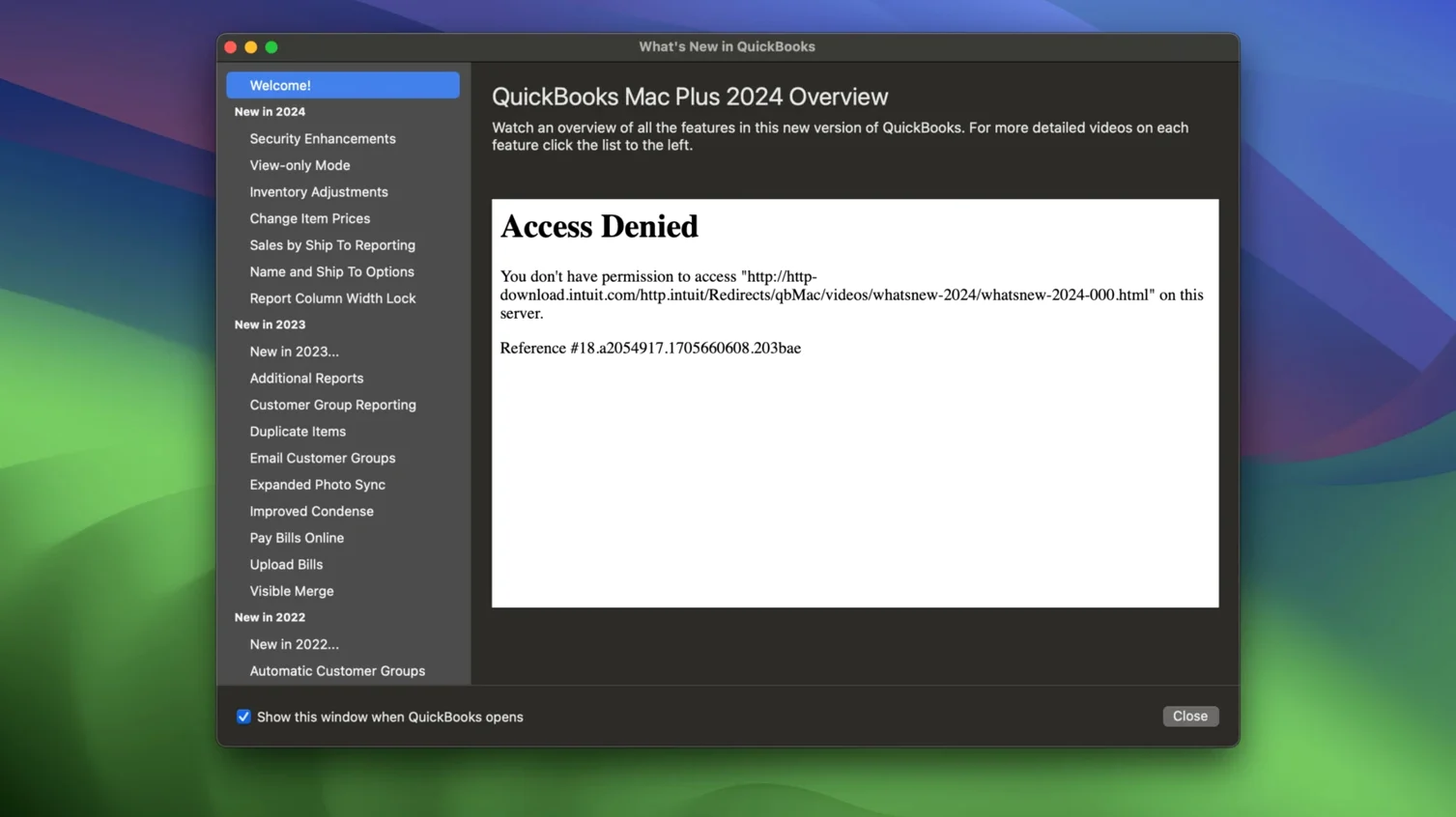
Click a screenshot to see it wider.
Open the Profit & Loss report and you’ll see why the 90-day projection pane is the first thing I check. QuickBooks Mac Plus 23.1.9.R10 pulls in estimated income and expenses, so you know where the next quarter stands before you commit to that office supply order.
Import the Chart of Accounts
Bring over your existing setup from an Excel sheet or a Xero export. The import wizard maps columns cleanly, and the dashboard updates immediately — income, expenses, paid invoices, all in one view.
Set Up Inventory Items
Enter products and services in the inventory tool, then track stock in real time. Attach a receipt photo to any transaction, and the search finds it later without digging through folders.
Run a Cash Flow Forecast
Generate the detailed report that shows projected income and expenses for the next 90 days. Save it as a PDF for the partners, or keep it on screen while you adjust the numbers. That’s the whole job, done from one company file.
Typical Session: End-of-Month Close
Monday morning, first task is the monthly reconciliation. I open the company file and check the dashboard — income and expense bars give me a quick read on whether the numbers look right. The bank connection has already pulled in transactions overnight, so I match those against the register. Anything unfamiliar gets flagged; I attach a receipt photo from my phone straight into the transaction screen.
Next, I run the Payroll report. QuickBooks has the hours logged from the previous pay period, and the tax calculation is automatic. I review the deductions, adjust one line for a new hire, and approve the batch. The check amounts flow into the expense ledger without re-entering anything.
Last step is the backup. The R10 release added company-specific backup locations, so I choose the folder on the office NAS instead of the default. The manual Backup Save As option writes the company file there in about a minute. Done.
Scenario: Freelance Bookkeeper Handling Multiple Clients
Sarah works from home in Cincinnati, keeping books for five small businesses. Each client has its own company file on her MacBook Air. She starts her day by importing a client’s monthly bank CSV — the import wizard accepts the layout without re-mapping. She reviews the Profit & Loss for the quarter, then sends invoice reminders directly from the app. The 90-day projection tells her which client might run short on cash by March. No spreadsheets, no switching between tabs. She closes the file, opens the next one.
Workflow: Import Sales Data from Excel and Send Invoices
- Open the company file and go to the import section. Choose the Excel file that contains the month’s sales lines.
- QuickBooks recognizes most headers automatically, but you can adjust one or two.
- Review the preview. If the tax column is missing, the automatic tax calculation picks the default rate for your state. Confirm the import.
- The dashboard updates with new income figures and unpaid invoice counts. Scroll to the Sales section and select the customers who appear on the imported list.
- Create invoices from those transactions. The inventory tool deducts the stock quantities in real time as each invoice saves.
- Send the invoices via email. The report module lets you generate a quick Sales by Customer summary to verify the numbers match the original Excel file.
This workflow replaces about two hours of manual data entry. One import, one set of invoices, one backup before you close for the day.
- R10 adds a Backup Save As option for manual backups.
- R10 adds company-specific backup locations.
- macOS 12 Monterey or later
- Apple Silicon or Intel x86 64-bit
- Interface: English
Questions I get about this line
Yes, you can import data from Excel tables directly into the app.
It requires macOS 12 Monterey or later, and it supports both ARM and x86 64-bit Macs.
Yes, the app supports uploading and storing receipts with transactions.
The install order
- Open the downloaded disk image.
- Drag the app to the Applications folder alias.
- After copying finishes, launch the app from Launchpad.